
Building Techniques
-
3D printers for beginners
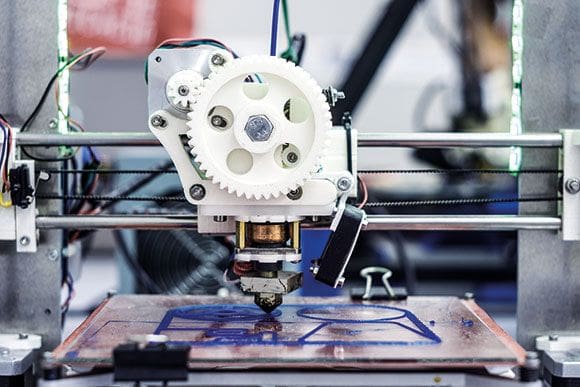
3D printing may seem like a fairly recent innovation, however it’s been around for longer than you might perhaps imagine. The first 3D printers appeared commercially in the mid 1990s, but priced in the region of £75,000 they certainly weren’t cheap – you were in Ferrari and Porsche territory. The technology was developed in the 1980s,…
-
Hints & tips
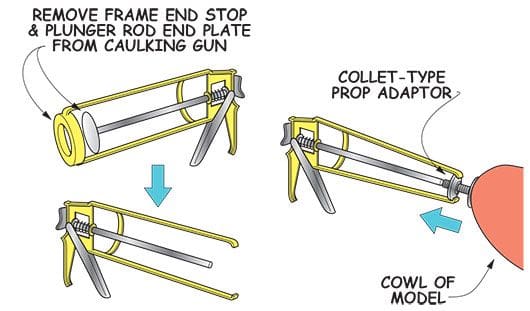
JAMMIN' “Whilst removing a propeller from my model I encountered a jammed collet-type prop adaptor”, writes Henry Leong from Brisbane, Australia. “This wasn't the first time this had happened, and the subsequent firm, twisting and tapping required to separate the tapered outer collar from its shaft is always a worry, risking damage to the…
-
Wrap it up!
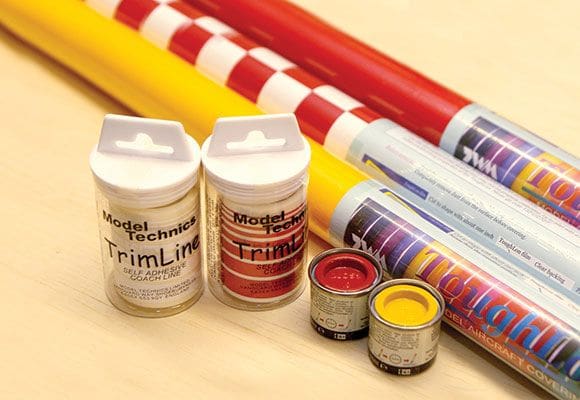
My home-brew winter project has reached the stage where the woodwork is essentially complete, bar some final gluing up, and it’s time to cover the model. Since the aeroplane is a sports design I’ve decided to use an eye catching scheme in a bright iron-on film. Now, before applying any covering I always perform a…
-
Wiring for the masses
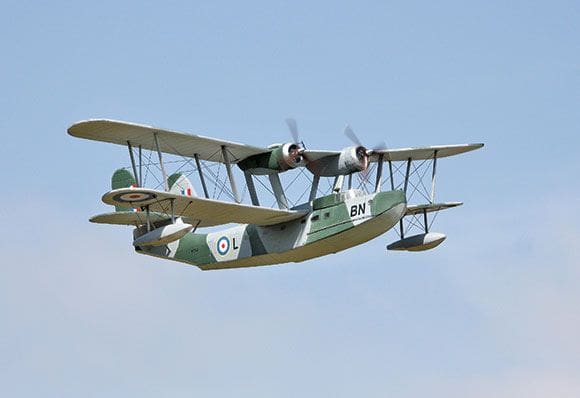
Visit any flying site and you’ll notice that, whether i.c. or electric powered, the majority of models being flown are single-engine. That’s not to say that twins aren’t seen, but for many the journey into multi-engine installations is a trip into the unknown and, therefore, often avoided like the plague! One reason for this is…
-
Glue Guide
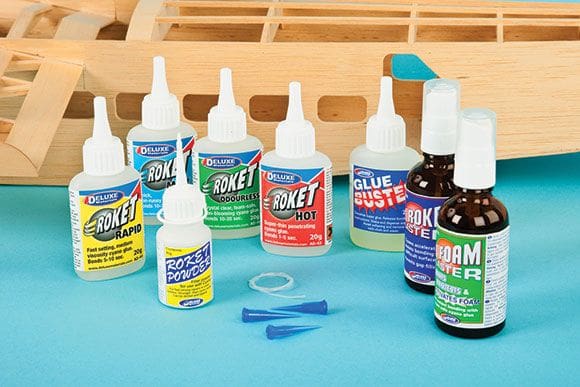
YOU WILL NEED: 1. A well ventilated room 2. A variety of cyano glues 3. Materials (wood, plastic etc.) on which to experiment 1. Whilst a plethora of glues are now available, the following tend to be more popular: thin, medium, thick, foam safe, odourless and, finally, EPO foam compatible. 2. The basic cyanos (thin, medium…
-
Building Renaissance
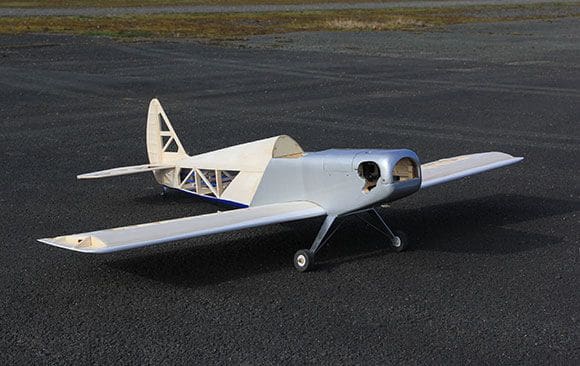
The plan for Renaissance is one of the FREE pull-out plans with RCM&E's July 2018 issue. Having created a plan, it is reasonable to expect some changes to occur. Although I’ve tried to think ahead, the practical build of the model will inevitably throw up unforeseen issues. I should briefly touch on CNC or laser-cut…
-
Little Black Boxes
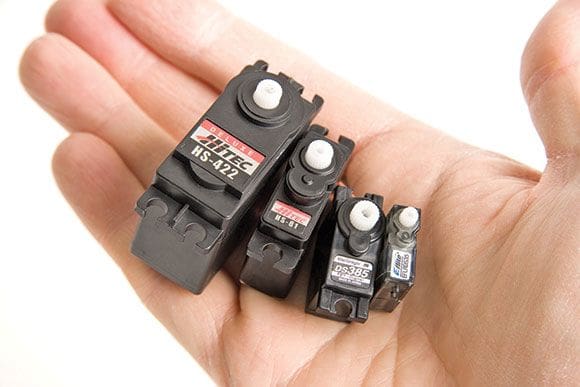
Servos are the muscle power in our models. All servos do the same job, they’re sent a signal from the receiver and translate the transmitter stick movement into an equivalent action at their output arm. This motion is used to drive any number of functions, from a control surface to retracting undercarriage. CONSTRUCTION Servos generally…
-
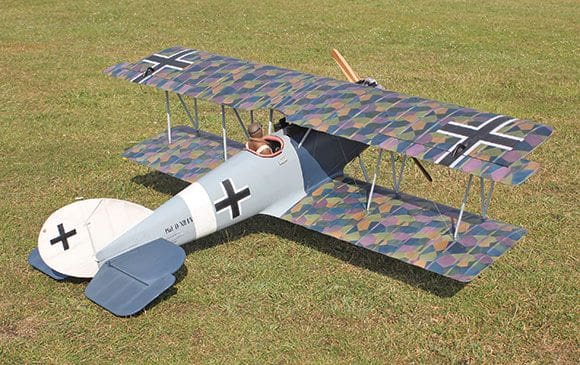
Lozenge de-livery
I often found myself in awe at the occasionally outrageous colour schemes adopted by the more flamboyant pilots of the German Air Force during W.W.I. Such aircraft (Pfalz, Fokker and Albatros, to name but a few) were seen in many different colours, individually painted to their pilots’ requirements, and can be found documented in the…
-
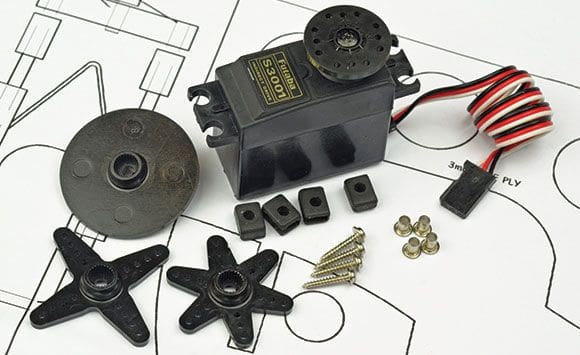
Back to basics
1. Most standard servos come with a set of four rubber grommets, brass ferrules and fixing screws. Also included is a selection of different output arms that can be changed to suit your model’s installation requirements. 2. The rubber grommets are first fitted to the servo’s mounting lugs, after which the brass ferrules are pushed…
-
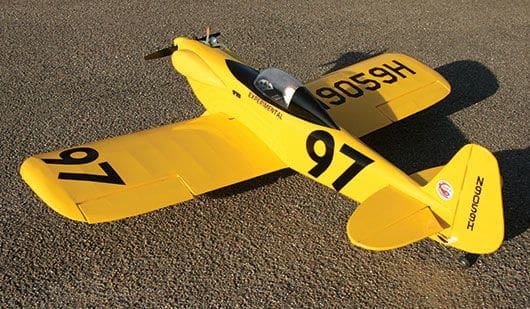
Learning your lines
This month we’re going to put some flesh on the bones by designing the fuselage, wings and tailplane. THE FUSELAGE BOX The first thing to do is draw the outline of the fuselage box. The front of the box will be F1, and the top will be on the horizontal datum line. The rear of…