Building Techniques

  • Cutting a Cowl

    Cutting a Cowl

    by

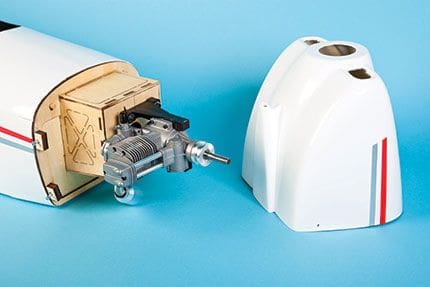
    YOU WILL NEED: 1. A mini drill or similar rotary drilling tool complete with cutting bit attachment. 2. Small needle files, fine sandpaper, masking tape and a marker pen. 3. A face mask. The dust created during the cutting process is unhealthy and can cause serious irritation.   1. In much the same way as a hacked or…

    Continue reading »

  • Real Men Don’t Sew!

    Real Men Don’t Sew!

    by

    Hinge Thing These days when we need to hinge a control surface such as an elevator, aileron, or rudder, we troop off to the model shop and select an off-the-peg commercial solution. All well and good. However, in ye olden days we used to sew control surfaces to flying surfaces with ordinary cotton thread. As…

    Continue reading »

  • Soldering on

    Soldering on

    by

    The last time we were gathered here I signed off by promising to show you how to make a perfect wire wrap solder joint, but before we do, I’m going to iron out a few wrinkles following feedback from well-meaning readers that states: Washing items with water prior to soldering could be a problem in…

    Continue reading »

  • Don’t bin it, fix it! Pt.2

    Don’t bin it, fix it! Pt.2

    by

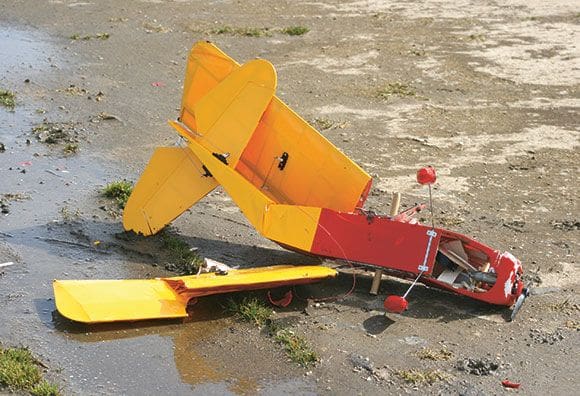
    You’d be surprised just how much damage a model can sustain and still be repairable. Take the club member who flew his new ARTF CAP 232 into the concrete, for example. The fuselage was reduced to a mass of splinters, but after a spell in the workshop his model was back in the air looking…

    Continue reading »

  • Don’t bin it, fix it!

    Don’t bin it, fix it!

    by

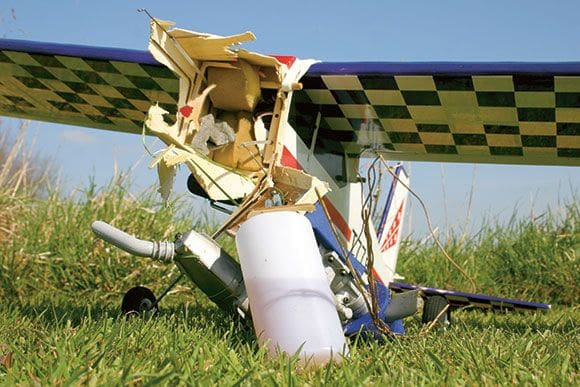
    The trouble with today’s ARTF culture is that flyers who’ve never built a model from scratch don’t know how to repair their aircraft when they crash or damage them. As a result, too many people are spending money unnecessarily replacing broken models which, for just a few pounds, could be put back into the air.…

    Continue reading »

  • Under pressure

    Under pressure

    by

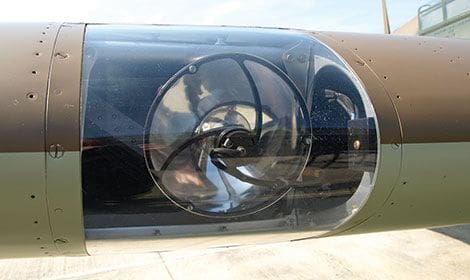
    Okay, confession time. In the decade or so that I’ve been designing and scratch-building sport-scale models, one of the key factors that’s helped determine my choice of subject has been the complexity (or rather the lack of complexity) of the cockpit area. I’ve quietly tended to plump for models that feature simple, flat-screen windshields or…

    Continue reading »

  • Constructing the perfect joint

    Constructing the perfect joint

    by

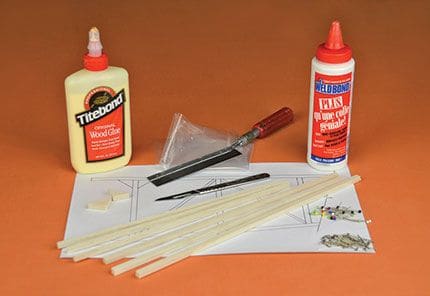
    YOU WILL NEED: 1. Balsa for longerons and uprights (6 x 6mm pictured). 2. Balsa for gussets (in this instance, 6mm sheet to match the longeron thickness). 3. Balsa for diagonals (6 x 3mm or as directed by your plan). 4. A small saw. 5. A scalpel. 6. Modelling pins. 7. PVA or aliphatic wood glue. 8. A flat…

    Continue reading »

  • True to Life

    True to Life

    by

    Doesn’t time fly when you’re having fun? I couldn’t believe it was time to put pen to paper again and update you on the projects loitering in the workshop. This month I thought we’d begin by looking, once again, at RDS and hidden controls. This was promped by a letter from a fan of the…

    Continue reading »

  • Question of balance

    Question of balance

    by

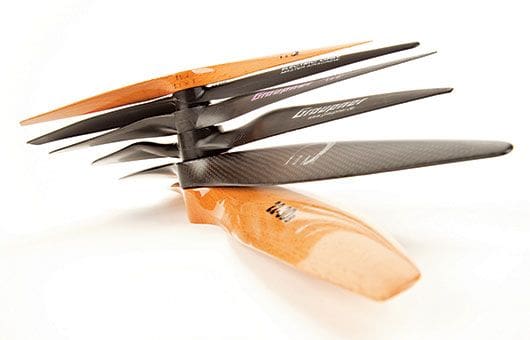
    A subject that draws many questions within our hobby concerns propellers. How to balance them correctly, how to test the balance, the difference between static and dynamic balance, and how to accurately enlarge the shaft hole. It’s all good, valid stuff, so let’s dive straight in. I’ve lost count of the number of times I’ve asked…

    Continue reading »

  • Inextricably Linked

    Inextricably Linked

    by

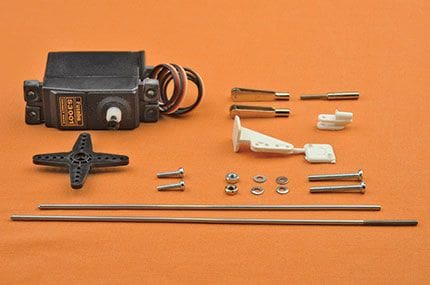
    YOU WILL NEED: 1. A servo, complete with fixings and a plastic servo arm. 2. A control surface horn and its screw fixings. 3. A piano wire pushrod, either from plain wire or with one end threaded. 4. One metal clevis. 5. A swing keeper. 6. A threaded coupler. 7. A ring of neoprene fuel tube. 1. There are…

    Continue reading »