Flying Techniques

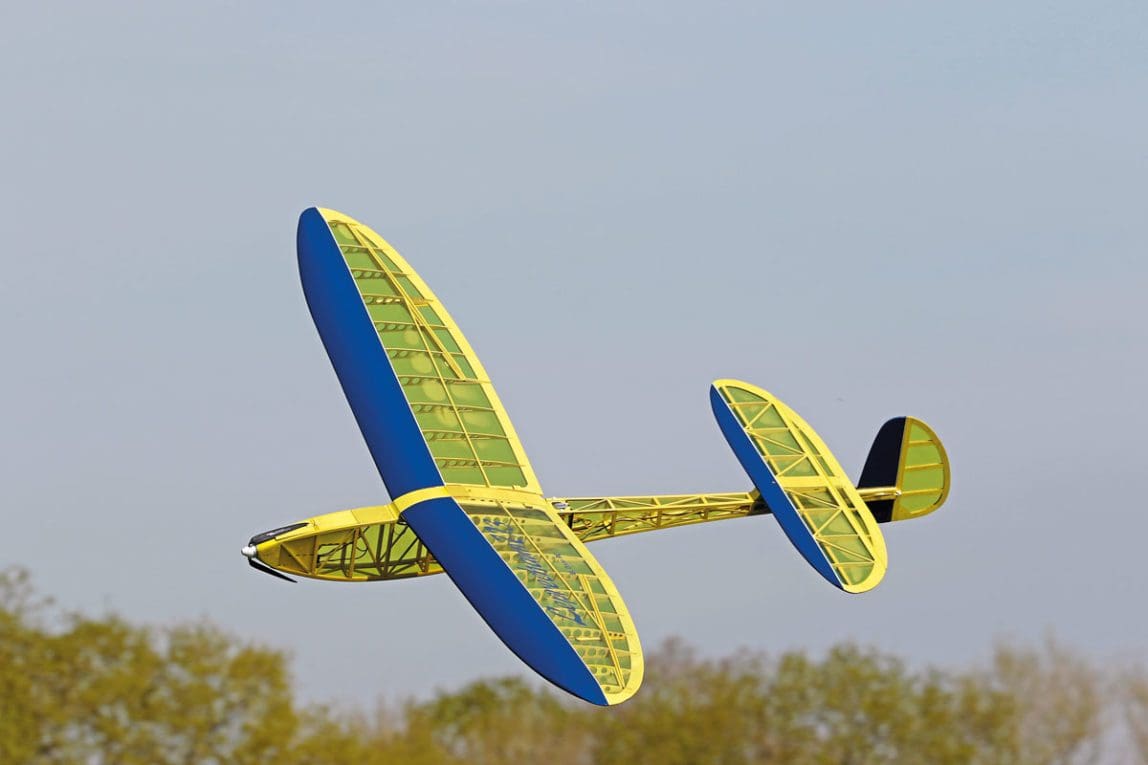
  • Testing a vintage glider: Leprechaun V3

    Testing a vintage glider: Leprechaun V3

    by

    As David Ashby discovers, when it comes to vintage gliders bigger is indeed better…

    Continue reading »

  • Play Misty For Me

    Play Misty For Me

    by

    When it comes to model photography, there’s a lot to be said for a low winter sun. Chris Williams gets his camera out…

    Continue reading »

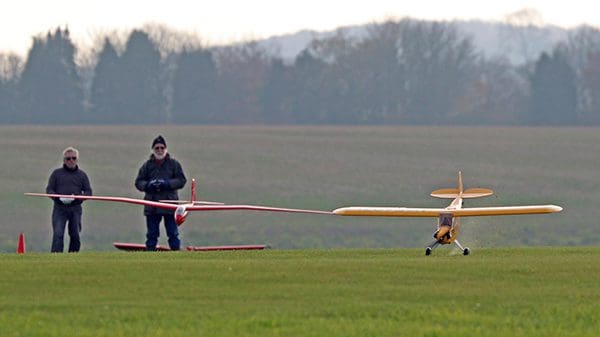
  • ADVENTURES IN ELECTRIC AEROTOW

    ADVENTURES IN ELECTRIC AEROTOW

    by

    History repeating? The electric Cub tug experiences some difficulty with the Petrel on the back. Chris Williams and chums try their hand at a spot of electric powered glider tugging. It all started a couple of years ago, when my long-time flying buddy, Barrington V. Smallpiece built a miniature scale glider – a Skylark from…

    Continue reading »

  • Pilot’s notes: looping the loop

    Pilot’s notes: looping the loop

    by

    Everyone likes ‘looping the loop’ when they’re learning to fly, and it’s a good thing too; we all need a bit of light relief during training sessions. However, there’s more to a perfected loop than just pulling in ‘up’ elevator. Ultimately you’ll be using all four primary controls (throttle, aileron, rudder and elevator) to nail…

    Continue reading »

  • Stall School

    Stall School

    by

    By definition, the stall is a condition whereby the angle of attack increases to a point where lift begins to decrease (‘angle of attack’ is the angle of the wing leading edge in relation to the horizontal). It’s not only at a low power setting when a stall situation will occur, it can happen at…

    Continue reading »

  • 10 things every flyer should know

    10 things every flyer should know

    by

    1. Aerodynamic appreciation. You don’t have to become an aerodynamicist, but it helps if you can appreciate some of the basic principles of flight and how they affect your model’s performance. Do you know why aircraft stall? What about the difference between ground speed and air speed, and why differing wing sections work the way…

    Continue reading »

  • In Trim?

    In Trim?

    by

    So you've flown your latest ARTF or scratch-built pride and joy for the very first time. How did it go? A few beeps of up trim and a couple of left? A click of the needle valve, maybe? Job's a good 'un! Are you happy to leave it at that, or would you like to…

    Continue reading »

  • 10 top tips for single-channel fliers

    10 top tips for single-channel fliers

    by

    1. Big-bang bands. In the ‘good’ old days, band spattering 27 Megacycle transmitters and superegen receivers had to be used one at a time, owing to serious interference issues with two models airborne together. CB radio didn’t help much but, fortunately, these days we have two very reliable, legal frequencies in both 35MHz and 2.4GHz.…

    Continue reading »

  • Taking off

    Taking off

    by

    1946. A small boy hastily dismounts from his bicycle in a narrow lane that skirts Pendeford airfield, home of the Bolton Paul aircraft factory, and lets the machine fall against the perimeter fence. His eyes are fixed on a nearby Tiger Moth, its engine idling as it stands at the threshold of a grass runway.…

    Continue reading »

  • House of hotshots

    House of hotshots

    by

    In this article, we’ll look at how the forces of nature can make a difference to an aircrafts aerobatic performance. Flying aeros on a calm day is one thing, but flying them in the same manner on a windy day is another and will invariably lead to your stunts and tricks being bent out of…

    Continue reading »